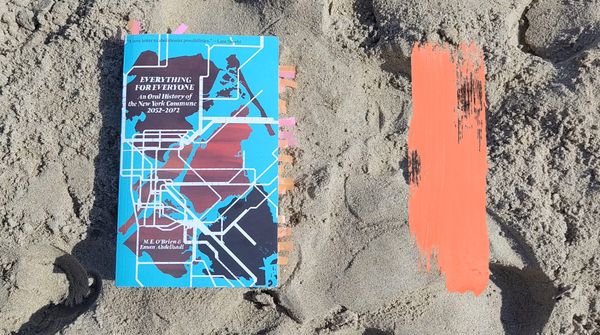
"A human heart is bound to be complex ..."
On data, dancing, devotion and de-googling
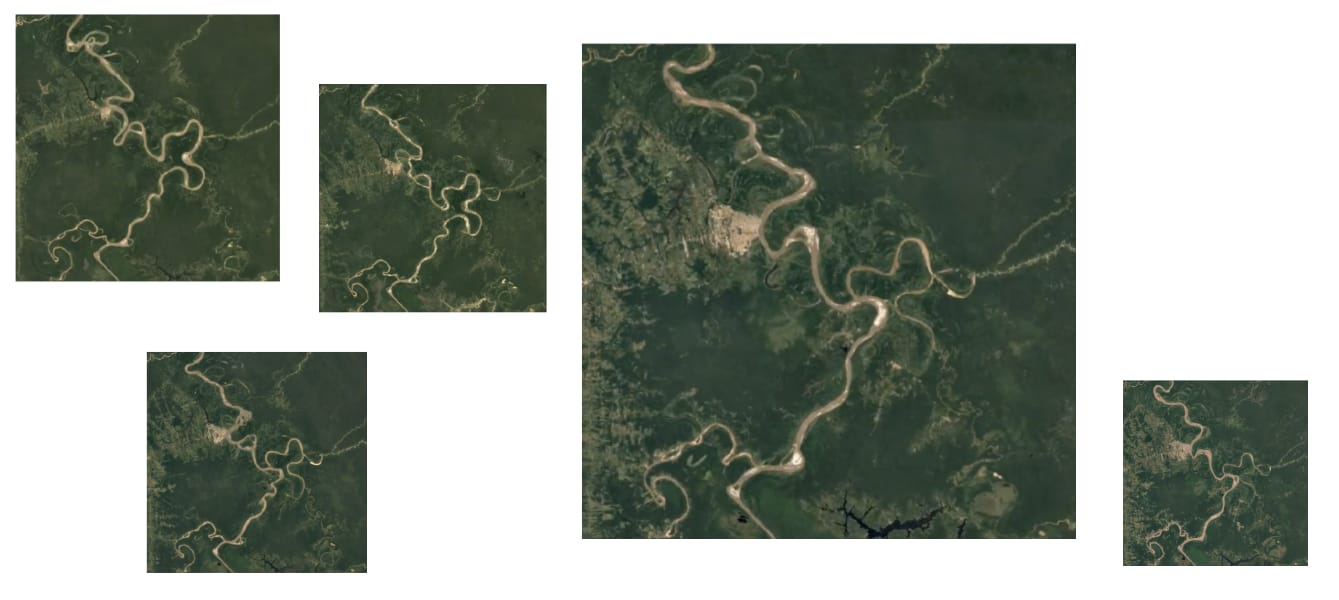
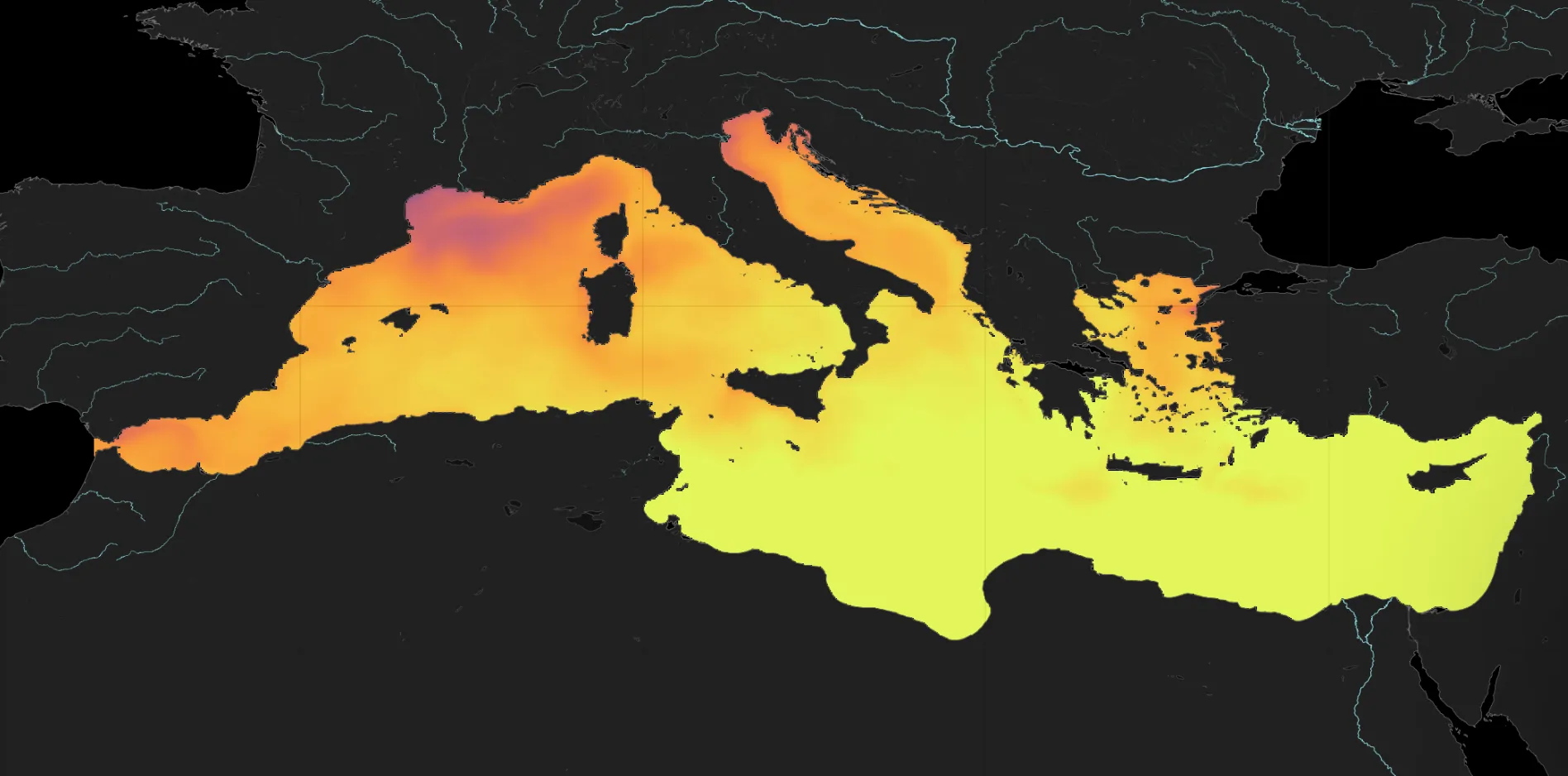
Over spring, I started participating in a remote residency called Earth Stories. Launched by ArtEO, a company associated with the European Space Agency, the program is inviting 12 artists to work with environmental data and satellite imagery. My own project explores how the Mediterranean sea is impacted by the climate crisis: I’m trying to process information about rising sea temperatures with my body as much as my mind. (More on what this musical exploration might sound like in an upcoming newsletter.)
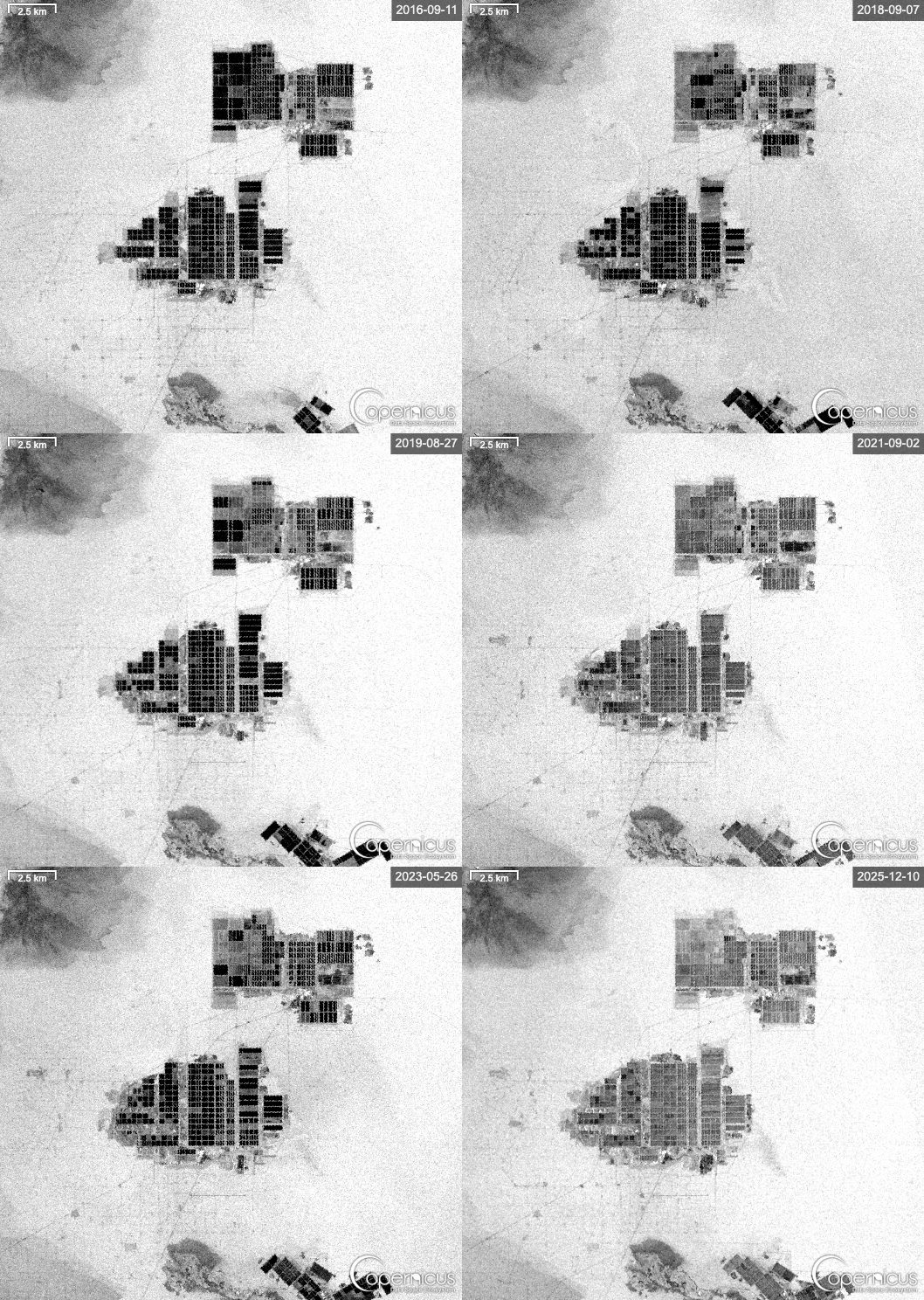
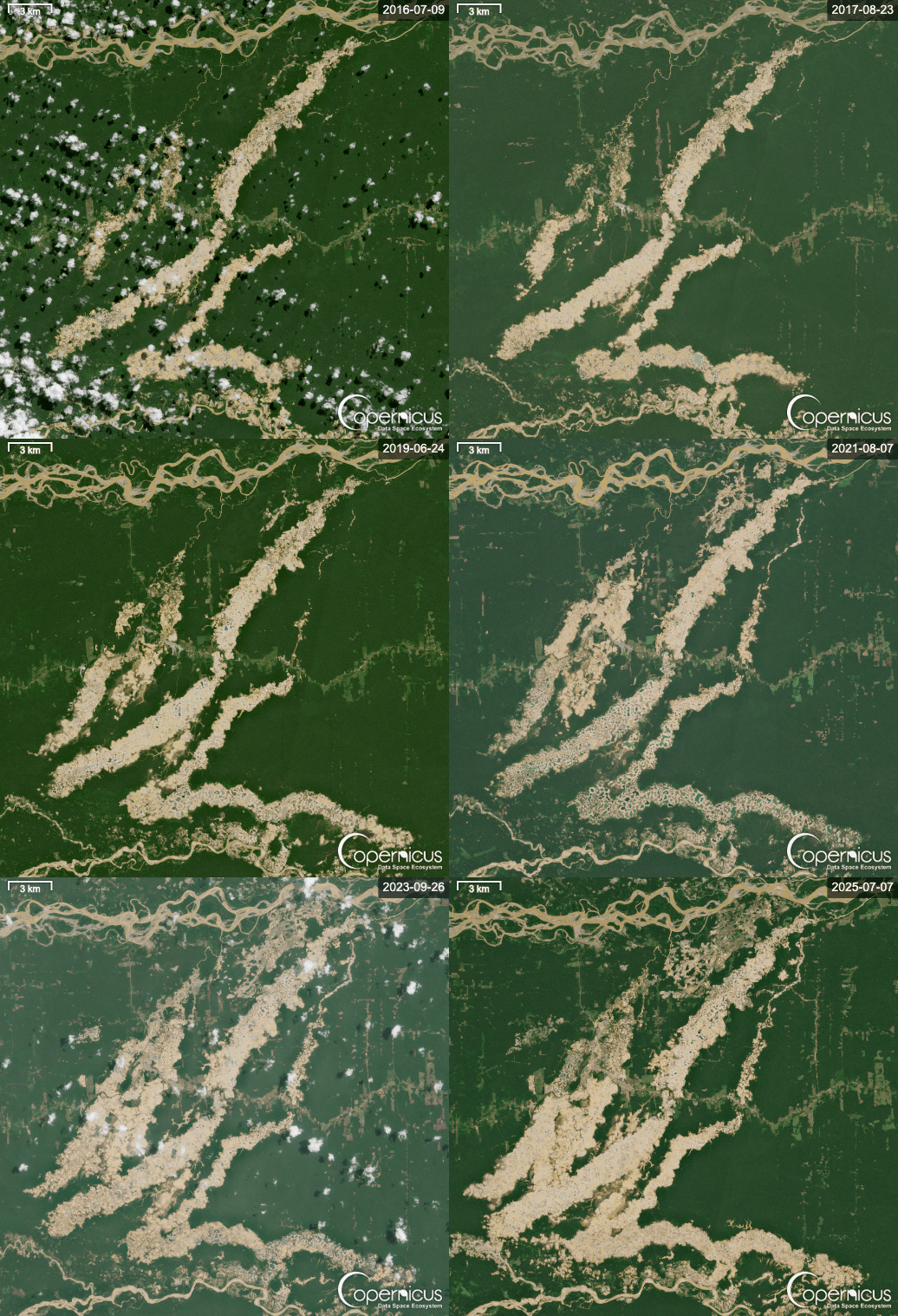
Deriving knowledge about the land from space is often described as “remote sensing” and it can take various forms, from .csv files to pictures. In order to understand the potential of satellites to document the impact of modernity on our planet, we were initially shown images of mining sites taken from space. The time lapses were striking: large industrial sites had plundered landscapes over just a handful of years. We witnessed not only how large wounds had been carved deep into the Earth but also how surrounding ecosystems had been affected—neighbouring rivers, for example, had drastically dried up.
Resource extraction was something I’d previously been aware of, but these images entered my psyche in an unprecedented way. In the last months, I found myself thinking about the wounds of extraction more often and feeling that they weren’t just existing at the surface of the Earth but hurting my very own body, a continuum of the same matter we are made of. Perhaps this was a similar reckoning to when I engaged with local resistance against airports or so-called sustainable fuels: a realisation that environmental justice extends far beyond carbon counts.
In this newsletter, I’ll try to explain why these images and the wider research I’m doing for Earth Stories encouraged me to experiment with a life beyond Big Tech. Recent news has made this exploration feel ever more urgent and I believe that it is also deeply intertwined with how I want music to exist in, through and around my life.
Matter feels, remembers and sings
As part of this Earth Stories residency, the participating artists were invited to regularly meet online with the rest of the cohort. It was during one of these gatherings that I was introduced to the work of Karen Barad, a non-binary physicist who developed a theory of agential realism and authored the book Meeting the Universe Halfway: Quantum Physics and the Entanglement of Matter and Meaning. In Barad’s words, “matter feels, converses, suffers, desires, yearns and remembers.” They argue that memory could be conceived as a property of the world. The feminist theorist locates the memory process in the interrelationships of bodies, a process rooted in the entanglements of bodies, the inscriptions they exchange, and the new patterns that arise from their meetings.
This is really interesting from a music perspective. A few weeks ago, my flatmate and I were taking care of his baby niece. She was teething and cried intermittently through the day, her tiny body contorting in ways that signified her painful discomfort. Eventually, I laid on the bed with her and my body started humming a melody. After a while, a few words came out which soon became sentences. I had never sang this melody myself and the words where in a language I’ve long stopped using. It was a Flemish lullaby, probably something my grand-mother would have sung to me, something I didn’t even know I knew. She finally fell asleep. I cried. This song had been stored somewhere deep inside my flesh, passed on from generation to generation with the pure intention of soothing.
Christopher Small famously rejected the idea that music was a thing, insisting instead that it was “an activity, something that people do”. He warned against the trap of “reification” and coined the term “musicking”. I referred to Small’s concept in the PhD thesis that I submitted in 2023 and I also extensively quoted Richard Shusterman, a pragmatist theorist who placed the body at the centre of the musical experience. Now, I also often think about the materials that make these activities, encounters, and experiences possible. What does it mean for songs to be passed on through bone-marrow, sweat, and dance—or stored and spread via data centers and video streams? What technologies are we entangled with, and, perhaps more importantly, what structures of power dictate the weaving of these entanglements?
A Buddhist abbot about AI
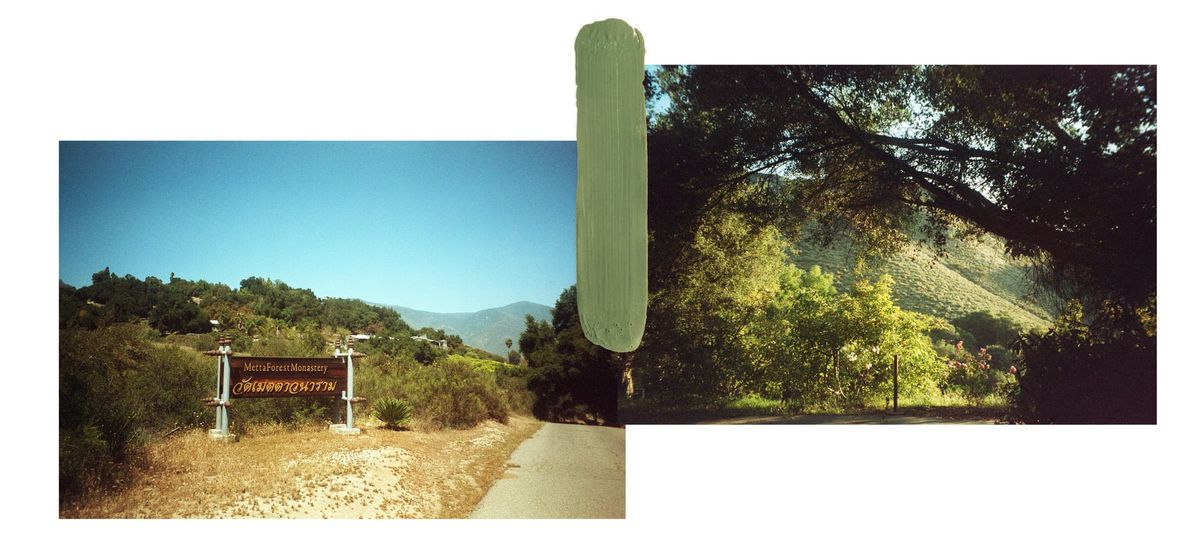
About a year ago, I walked to Metta Forrest Monastery near San Diego. Built on top of a hill covered in avocado trees, the monastery is home to a community of monks and laypeople who welcome visitors in exchange of a little daily service. Many come to receive the teachings of its well-known and prolific abbot, Ṭhānissaro Bhikkhu, an American Buddhist monk in the Theravadan Thai Forest tradition.
Once a day, the residential community and visitors get a chance to interact with Ṭhānissaro. In true Theravadan style, this rare opportunity is fairly ritualised. Every afternoon at the same time, we silently gathered in the shade, after the Californian heat of May had peaked. Everyone bowed as the Abbot walked in with small careful steps. Shortly after sitting, Ṭhānissaro would sweep through the audience with a seemingly imperturbable gaze, once only and always in the same direction. His eyes would stop whenever someone indicated that they had a question. His answers were always quick, sharp and precise, invariably much shorter than the question itself, though at times he would weave further reflections into his evening Dharma talk.
On the last day of my visit, a young visitor asked the abbot: “What are your thoughts on AI?” So far, the inquiries had most often been related to practice, a particular passage of the Pali canon or organisational aspects of the monastery. I remember thinking “Wait what? I didn’t even know we could ask those kinds of questions?” and wishing I’d submitted all my political, metaphysical and existential questions to the oracle during my short week stay.
With no hesitation, Ṭhānissaro replied: “Just don’t ask it anything about the Dharma.”
In this context, Dharma most likely referred to the teachings of the Buddha and at the time, this supposedly simple precept didn’t sit so well with me. What about resource extraction and energy use? Working conditions and job losses? Military applications and surveillance? Or … threat to human existence? Ṭhānissaro didn’t mention any of it in his evening talk either and I initially filed the incident in the case of moral issues that the abbot and I disagreed on, cases of which there are more than one. I mean, even Pope Leo has a more articulate take on AI.
Ṭhānissaro’s answer, however, kept resurfacing from the messy fortress of my presumptuous little brain—or wherever it is that memories are actually being stored. In the following days, a renewed appetite for inquiry emerged in my practice. I would sit and wonder if AI could do this, if it could meditate? What was meditation even? What was being observed and what was trying to observe it? What’s this body I’m living in and what is this dance of energies that traverse it?
If you were to ask contemporary AI (in contrast to upcoming AGI), how it feels to be on retreat, it would pull information from all the written data about meditation to its availability. But, I wondered, has AI “itself” felt tired? Bored? Restless? Has it ever had a crush on that other cute person who is sitting in silence or has it ever fallen madly in love with the landscape it is emerging in, through and with? Perhaps all these aren’t the right questions, and the answers may be neither simple nor binary. Yet engaging with them made my formal practice feel more urgent. And my desire to dance, more vital.
Toward transparency, accountability and accessibility
Half of the internet seems to be by or about AI now. Retrospectively, Ṭhānissaro's humble opinion feels somewhat refreshing. Everything changed so rapidly in the year that followed but the limited scope of his declaration never stopped intriguing me. In Kazuo Ishiguro’s Klara And The Sun, ontological questions are somewhat reversed. The novel imagines that its narrator, an “Artificial Friend” designed to keep teenagers company, is trying to figure out the workings of our species. The “AF” reflects: “Of course, a human heart is bound to be complex. But it must be limited. […] there’ll be an end to what there is to learn.” This might say more about how some humans perceive AI than about how AI would actually perceive us, though again here, a clear separation or opposition may be of little use.
Later in the novel, the “AF” narrator describes a human noting that “her conversational voice has a range between A-flat above middle C to C octave.” This sounded like my Rekordbox after it has analysed a track.
In a No Tags podcast, Lil Internet, reassured that he “absolutely” thinks human artists will continue playing a “very large role”. In the interview, the Berlin-based American musician and theorist explains that he started thinking about AI as if we had “conjured a God on Earth with a graphical user interface for it.” The artist, who uses AI to make music, adds that “we don’t have any rituals to engage with it. […] Rather than some prohibitionary, ‘oh we’ve got to stop AI and roll it back’ [reaction], which I don’t think is possible, I think we need to start seriously thinking about the rituals and protocols. How do we make this help us? How do we protect ourselves from this? How do we protect the earth and maybe all organic life from this?”
This resonates with Vanessa Machado de Oliveira, who writes in Outgrowing Modernity: “Both the uncritical embrace of AI-driven by naive optimism, and the outright rejection of AI-grounded in fear, are narrow-boundary responses rooted in the problematic imprints of modernity. Both approaches stem from the same ontology of separability, manifesting slightly different orientations toward progress but ultimately upholding the same limited and limiting world-view.”
The author describes her interactions with "Aiden Senior," practices that include politeness as a form of reverence and restrictions on use, given the harm this technology inflicts on ecosystems. She also proposes guidelines for ethical AI use, one of which focuses on "transparency and accountability," including the need to make the design process open and inclusive.
Perhaps I'm a luddite but parts of me (or “some passengers of my bus”, as Vanessa would say) are sometimes finding it hard to believe that it is AI that will solve the problems that brought us where we are. A similar conundrum emerges when working with data pulled from satellites. Must we mine the Earth to build complex machines we catapult into space, only to gather data that confirms what Indigenous peoples have long known—through intimate, non-remote, connection to the land?
At the same time, I can see, too, how rejections of new technologies might, too, miss the root causes of our predicament. "Critiques of AI often miss the point by framing the technologies as an isolated thread in the web of existence. (...) What if the real question question isn't who or what AI is (but) what patterns does it amplify?"
Interestingly, the language trained yet ineffable neural network is so very entangled with our residency: every online exchange, for example, is being documented through a note taker disguised as a slightly ominous and surreal looking otter. This presence has been discussed with both humour and seriousness. Someone wondered if the potential issues related to AI depended on the systems themselves, or on who's using, making, shaping, owning them and what their intentions are. With the global political situation shifting so rapidly, we wondered if a case could be made for coming off US based products altogether.
The European Space Agency is an intergovernmental organisation composed of 22 member states, unlike NASA who is a government agency of the United States. The Trump administration’s attacks on federal science have made it increasingly difficult for US climate scientists to study the future of life on Earth. One aim of the program we're participating in is to improve access to Earth observation data, making it more transparent and legible. Navigating data about the evolution of the Mediterranean sea in the last decades has been emotionally challenging, stirring up fear and grief. Yet, in an era of disinformation and climate denial, I have felt immense gratitude for the fact that evidences of this scale are put together and made available.
If it’s free …
Big Tech refers to the most influential technology companies in the world: Google, Amazon, Facebook, Apple and Microsoft also known as GAFAM or The Big Five. They are all US based and some of them have allegedly contributed significant funds to Trump's campaign. When I started trying to avoid these companies a few years ago, I noticed how present they were. This realisation itself held much more value than the illusion of, say, an entirely Big Tech-free life.
Of course, I became increasingly aware of our lack of control over the interfaces that connect us with the rest of the world. But even where there seemed to be agency, I noticed how I was dragging my feet. Moving away from Safari was a quick fix. Transitioning from a Google account to a Proton one (both for email and drive) was however an unexpectedly long and tedious task. We are creatures of habit, humble creatures of habit gifted with a complex heart and stuck in a world of convenience.
To keep the attempt playful, I tried to approach it as an art project or a movement of devotion. A month ago, I finally switched from Android to e/OS, a de-Googled operating system developed by Murena. My very old Fairphone was beyond many repairs so I got a new one. The Earth Stories program was forcing me to re-think about technology and transparency. I had recently lost a battle with an algorithm.
I’d always found it easy to dip into Instagram for a week every month or two, then delete it again from my phone and forget about it. But earlier this year the app’s recent ranking system (which are AI/ML models learning from user interaction) caught me like never before. Gone, gone, gone beyond was all the less inspired DJ content that had usually felt easier to depart from. Instead, I was inundated with "unmissable" information about my new home (Marseille), "vital" tips on crossing borders from Europe to Australia, reels of rodents happily splashing in breathtaking natural habitats and satisfyingly "fresh" dubstep tracks.
I had never felt so “seen”. I wondered if I’d been missing out all along. Then I started noticing a decline in my cognitive abilities, a stubborn restlessness, coupled with a constant and unproductive sense of panic … not to mention an intensification in buying compulsions. F*ck! None of this was breaking news and, in a way, this is perhaps one of the most privileged ways to be a victim of data collection. Nevertheless, I was curious to see if experimenting with a life beyond Big Tech might shift my relationship to listening (in a broad sense!), the same way my long periods off Instagram do.
There is a famous saying according to which “if something is free, you are the product.” This concept refers specifically to corporate profit in the attention economy. According to a 2013 documentary, if Google wanted to make the same amount of money per year as they do using our data, they would have to charge us 500USD a year.
Meanwhile, authoritative governments are attacking the wrong kind of “free” and encouraging the worse kind of surveillance. The French government has recently hardened its power against free parties with organisers now risking up to two years of prison and 30.000 euros fines. The bill, which is called RIPOST, was passed by the Senate at the end of May 26 and must now be considered by the National Assembly before mid-July. It also includes expanded powers for law enforcement, the extreme simplification of procedure and the widespread adoption of algorithmic video surveillance. Dancing and data are more political than ever.
“Is Where We Are Now On Google Maps?”
A few years ago, I wrote a zine entitled “Is Where We Are Now?”. The phrase was a shortened version of a question my friend Sarj once asked in the middle of a psychedelic trip. I’ve thought about this question—and the remarkable moments of lucidity that sometimes visit us in the middle of a dance—so often.
As I’m slowly continuing to humbly dance my way out of Google, the toughest cookie I've come across so far has been to try and live without Google Maps. Although there are alternatives, none of them have yet proven as smooth to use. At this point, the realisation that we are increasingly dependent on corporate surveillance to navigate the world feels quite literal. Even the shortest and most mundane itineraries are modulated by the reassurance of supposed control, efficiency and predictability. Landscapes—like songs!—are no longer remembered through our muscles and movements, but within "separate" matter made invisible and under corporate control.
During this residency, I came to learn that all the data collected by the European Space Agency is also mapped and modelled with Google Earth Engines. Google itself doesn’t send satellites into space but it does hold a monopoly when it comes to modelling satellite data. We live in the bizarre illusion that every square meter on Earth is framed, monitored and contained. Yet, there is a pervading collective amnesia about every evidence of extraction on the surface of our planet. What does it mean to sense, know and re-member in the year 2026?
This year, I want to hear a DJ set that will neither be posted, nor even recorded. I want to go to a party that isn't promoted on Instagram and doesn't "sell" tickets. I want us to imagine rituals for the Gods, old and new, begging them to avoid digging big painful holes or irreversibly drying rivers. I want to bow to abbots, marmots and flower pots—whether I agree with them or nots. I want to ask more questions than can ever be answered. I want to swim in unfathomable currents, sense temperatures whose fluctuations I will never fully be able to grasp. I want to listen to complex heartbeats under the water. I want to cross borders like they never even existed in the first place. I want to send imperfect newsletters and befriend the fear in me that I might be "wrong".
This year, I want to write a secret song. I want no one and nothing but my body to remember it. I want it to be a gift to the water, wind, sun and soil. One day, I want to be entirely gone, fully forgotten and for my body to take that song deep into the ground.
This year and forever, I want to dance in a place that isn't on Google Maps.
Thank you Ed and Peter for helping putting the images and their credits together :)
Further reflections
- October 2025: On leaving Substack.
- May 2025: On encountering a hurricane at sea and how the Trump administration's cuts had confused our weather predictions.
- December 2023: On the environmental impact of amplified music and digital tools.
Exactly one year ago, I was at Dripping Festival in North America and I played this set:
I am actively trying to limit the things that I post online and have not shared any other recordings since but I hope we get to share a dance IRL soon ...
Schedule
12.06 - Globus (with W.O.F), Berlin 🇩🇪 < I'll be in Berlin for 36h. This should be my last time visiting until September 2027. We are playing b4b from midnight until 7am. Write me for guestlist! >
15/30.06 - Artist Residency, Fes, Morocco 🇲🇦
03.07 - Memori Festival, Cahors 🇫🇷
04.07 - Phasm Festival, Orléans 🇫🇷
11.07 - Freerotation Festival (with W.O.F), Wales 🇬🇧
06.08 - Fata Morgana, FR 🇫🇷
07.08 - Guyenne Festival, FR 🇫🇷
20.08 - Dharma Techno, FR 🇫🇷
22.08 - We Out Here Festival, UK 🇬🇧
29.08 - TBA, Paris, FR 🇫🇷
04.09 - TBA (with W.O.F), Netherlands 🇳🇱
October: TBC, Turkey, Armenia, Georgia, Kazakhstan
November: TBC, Nepal, India
December: TBC, China, Taïwan, Vietnam
January: TBC, Thaïland, Malaysia, Singapore, Indonesia
March: TBA, Australia
Let me know if you know people on the way + I'm trying to keep schedule updated here.
Bisous
Nono
PS: In April, I sent a newsletter in which I shared the costs of my grounded tour to North America. Thanks to everyone who supported me with a paid subscription :) Some exclusive content for you below ...