“… a macabre game of musical chairs … ”
Medicanes, submarine wildfires and underwater heartbeats

September is here. The light has been gentler and the temperatures, too. How are you?
This is an incredibly busy period for me so apologies in advance for the potential looseness of this newsletter and/or slowness in comms. Nevertheless, I managed to put together:
I. some pics and thoughts around a recent music making project about the Mediterranean Sea ;
II. an update on my attempt to avoid flying on my way to Australia ;
III. a list of the festivals I attended during the Northern hemisphere summer (as a DJ and/or as a dancer) and what resonated (or less).
Happy equinox! xx Nono
I. Medicanes, submarine wildfires and underwater heartbeats
At the end of July, tens of thousands of migrants attempted to swim from Morocco into Ceuta. A previous Spanish Supreme Court ruling had been misinterpreted as a claim that "the border was open”. Many never even made it into the Spanish enclave and over a hundred died, primarily from drowning.
In Silence Of The Choir, Mohammed Mbougar Sarr writes that “tragedies surrounding immigration play out like a macabre game of musical chairs; every day, each one displaces the previous one […] and waits for the next one to be pushed out. It is exhausting, but people have come to terms with the ongoing catastrophe, even though the truth of it remains unbearable.”
Mbougar Sarr’s novel describes the arrival of 72 African men to a town in Sicily. Brian had recommended it when we met in Morocco earlier this Summer. We’d both been invited at a residency in Fes and shared conversations about mobility justice in between working on our separate projects. As research for his upcoming book, the Ghanaean-Australian writer was planning to follow a migration route through Africa towards what, in his own words, “is ironically perceived as a Promised Land”.
Both man-made and natural borders make it difficult to migrate towards Europe. With the rise of fascism, evolving smuggling tactics and climate collapse, the challenges are only increasing. Silence Of The Choir tells of the mixed reception on Italian land and of the storms experienced during the crossing of the Mediterranean Sea.
Studies have established different relationships between global warming and such storms, though most of them agree that, with rising temperatures, a higher percentage of Mediterranean tropical-like cyclones will be of greater strength. In the 1980s, scientists even coined a term for Mediterranean hurricanes: “Medicanes”. This was also the decade which saw the birth of operational oceanography as a result of Earth observation via satellite expansion, improved computer capacity, and increase in number of in situ sensors.
In the last months, I’ve been working on a research project as part of ArtEO, a program supporting artists incorporating environmental data. I wanted to use my body as "in situ sensor", to practice a form of Earth observation that could converse with my own lived, grounded experience. Having recently relocated in Marseille, I became particularly interested in satellite data about the Mediterranean Sea.
The Mediterranean is warming 20% faster than the global average and is considered a climate change hotspot. I started looking at Copernicus and NOAA OISST related data sets documenting the rise of temperature in the water, especially near Marseille. I wondered if I could use these .csv files to incorporate them in a music making project.
As with most global warming issues though, the problem isn’t just the steady rise in temperature but their erratic behaviour and extreme episodes. The heatwaves (which I wrote about in July), were also observed in the Mediterranean Sea and are referred to as “submarine wildfires”. Temperatures near the Côte d’Azur usually vary between 22 to 24°c during the summer but, this year, the waters were frequently measured between 26°c and 30°c. Unsurprisingly, the consequences on ecosystems and biodiversity are catastrophic.
Engaging with these numbers and feeling them everyday was either weirdly abstract or brutally real. Was there a way to actually “process information about rising sea temperatures with my body as much as my mind”? I acquired a h2d hydrophone and started experimenting with recording my heartbeat from within the Mediterranean sea; I was curious to sense pulses with, inside and through her. I wanted to feel the rhythms and their chaos, the patterns and the mess, the beauty and the ugly … all entangled within and around me. I imagined being a floating body in a wider body with borders and boundaries eventually collapsing.
Peter from ArtEO had showed me an app which tracks the journey of floating objects across the oceans. According to dispersion models, a piece of rubbish dropped in Marseille might end on the shores of… Palestine. This somehow mirrors a wider imbalance in responsibilities across the Mediterranean basin. France and Israel’s overshoot day both happened in April this year, meaning that if every country in the world consumed as much as the residents of these countries the planet’s annual biocapacity budget would be used up on this day. Whilst there is no data for Palestine, Tunisia’s, for example, will only happen in November.
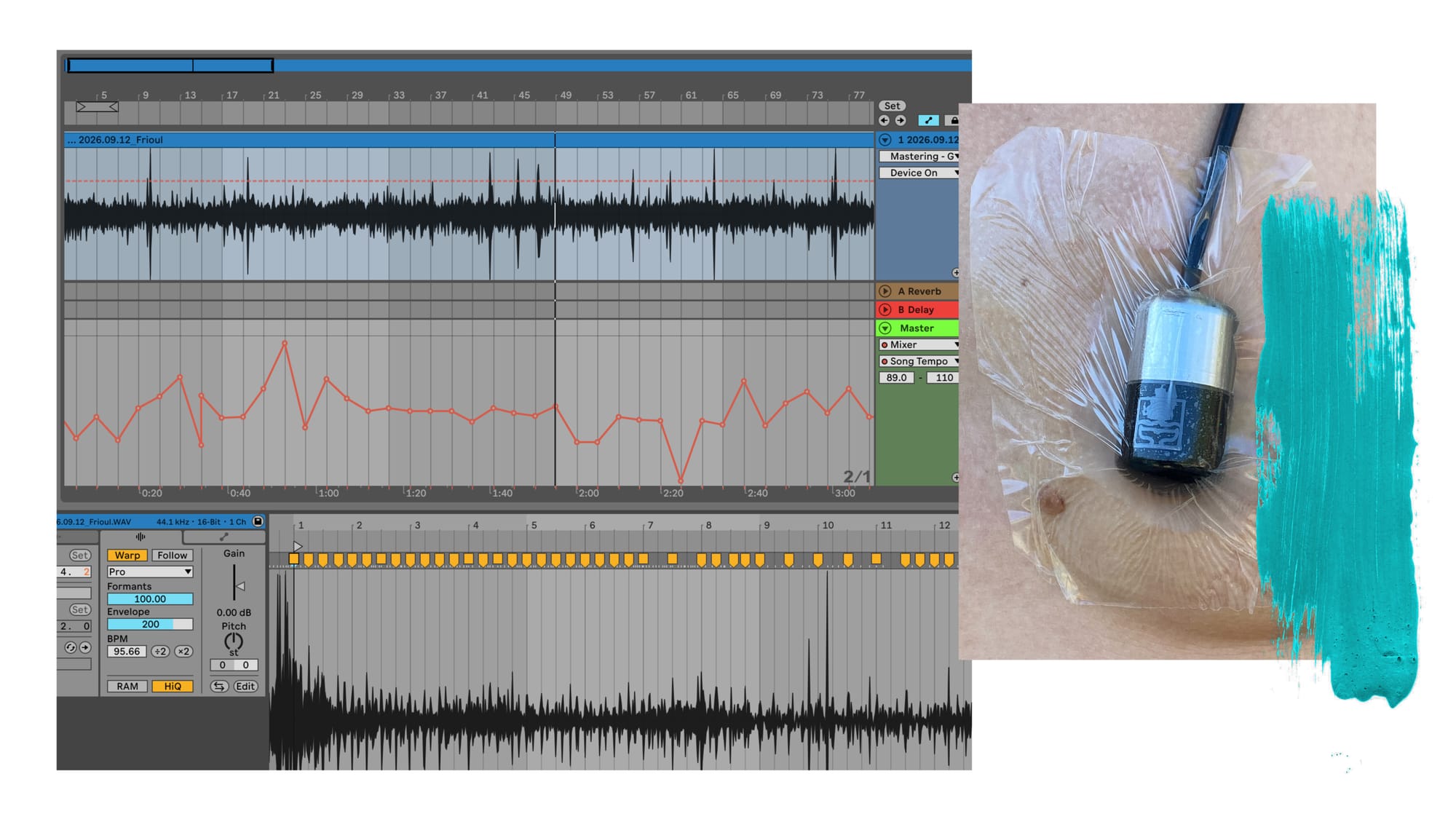
The h2d hydrophone was plugged into a zoom recorder which I needed to protect from water and waves. I tried to build a waterproof case into an empty plastic bottle, a symbol of all the plastic lost at sea. After weeks of trial, error and ruined devices, I gave up on the DIY attempts and found a little floating buoy that could keep my zoom away from the water -I taped the hydrophone with a waterproof bandage on my chest, and swimming I went.
Swimming for pleasure kind of is what hiking is to walking. There comes a moment where you just want to do the thing. It does not matter so much where you go, but rather that you go. In a newsletter I sent 2 years ago, I had quoted Deakin’s Waterlog: “The more I thought about it, the more obsessed I became with the idea of a swimming journey. (…) I grew convinced that following water, flowing with it, would be a way of getting under the skin of things, of learning something new.”
Whenever I get into the water, it has never not seemed fresh... at least at first. Whilst heatwaves were hard to ignore on land, our physical experience of them is somewhat different at sea. But the water provides its own perception attainments; I’d never realised how much I perceived air as void and liquid as full. Interestingly, the speed of sound is much faster in the air, as if things hung together. Water, as an element, seemed more conducive to reminding me of a vast mysterious entanglement: of turquoise depths with disappearing species, of the salt that allowed my body to float and the fuels of the ferry between Tangier and Marseille, of the privilege of marvelling with an h2d and the tragedy of lives lost at sea.
Sonically, I wondered if it would be cleaner to have two separate files (one recording of my heartbeat and another one for water acoustics). This way, I'd have more control over all the sounds and the mix down. But conceptually, they belonged together and creatively, it turned out to be interesting to have them intertwined. I made a calculation to convert monthly temperatures into a bpm equivalent. I then warped the heartbeat in the recordings to this new series of numbers. The additional sounds in the recording (water around my body, breath, moans and sometimes even digestion) moved along the newly set pace and, in being so processed, gained new qualities.
I had been using the warp function in Ableton a fair bit for edits, though I also love to keep tracks un-quantized—just one more way of having rhythms fluctuate in my DJ sets. The heartbeat’s BPM is never too regular either (”a human heart is bound to be complex”). Its rhythm is described as “lub-DUB”. I moved the warp mark on the “lub”, never on the “DUB”. (wow … should I print this last sentence on a mug?).
Over the past weeks, I felt an increasing desire to come back to the splashy-sounds-surrounded-lub-DUB. Not just for the project. Something about it feels improbable. It’s been an odd summer. Such a sad hot odd summer ; wildfires and the far-right progressing, ongoing genocides or quickly ignored immigration tragedies. A summer where it was still legal for the 10% to simply fly across borders in a highly emitting engine, later use an app telling them which bit of land they could/should buy to build their self-sustaining eco-commune. Meanwhile, the macabre musical chairs went on. Occasionally, yet another 20-something-AI-quitter came along with his very own doomsday predictions.
Whether “the end” is near or has already started, whether it would be slow, brutal or both, something is still beating. It won’t surrender just yet. Insoumis!! May the lub-DUB flow until we win.
PS: Thank you so much, Tom, for giving this essay a human proofreading :)
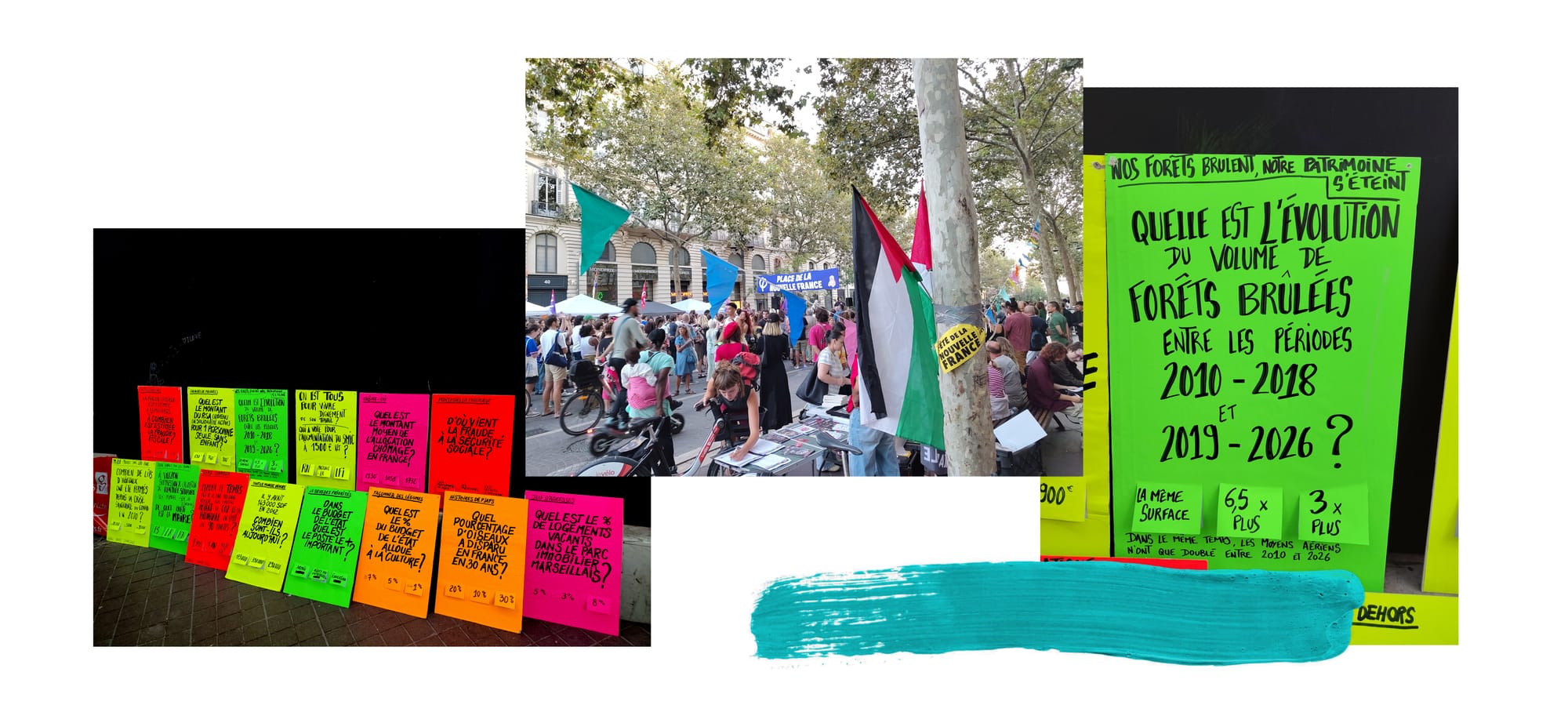
Sibling Sarj and I, musicking around and musing about radical imagination:
Not sure you can see the Soundcloud embedded links in this email? Otherwise, please read on the site.
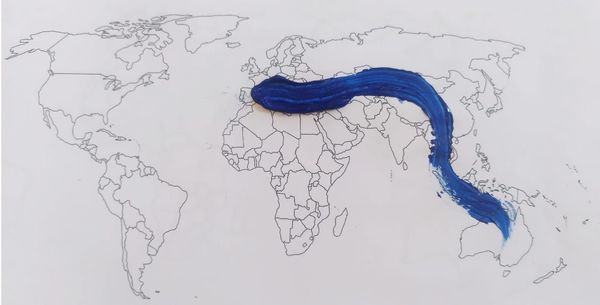
II. Marseille - Australia
I thought the North America adventure was the most complex and epic thing I had and would ever do in my life but this new tour is … something else. I’ve thought of cancelling regularly in the last weeks, or perhaps only going all the way to Georgia. Right now, I’m planning to leave home on Friday morning (!!!) and see how far I can go. Basically:
- The route between Georgia or Armenia and Azerbaijan is closed. I had to ask for a paper visa on my French passport to go through Russia. The French authorities discourage using this route but there are currently no other options to reach Asia by land.
- + side: This is a well-documented crossing with people posting about their experiences in various Discords at least once a month.
- I have gigs planned in India but the only way to enter the country by land was (until recently) via Nepal. Reaching Kathmandu was already quite complicated before the glacier collapse, as one needs to find a guide taking tourists from Lhasa to the border, in order to get permits. The recent catasrtophe made the crossing via Kodari impossible and, though there are rumours that Zhangmu might be open, I couldn’t find a Tibetan agency willing to take me through this route just yet.
- + side : I have a pending offer to play in Kathmandu and considering doing this on the way out ... if I ever make it to India at all.
- The other option to enter India is via Pakistan but it is unclear if the Wagah Border is open or not and if it accepts e-visas. I am still trying to obtain a paper visa on my Belgian passport but I have no idea when it will be processed and if I can then get it sent safely and in time for the crossing. Even so, I’d need to travel from Kirghizistan to Pakistan by myself which is complicated, partly because there is no public transport for theses passes.
- + side: I’m trying to keep weekends free on either side of Indian gigs to allow extra time if I get stuck.
- I have been struggling to make it work financially. All the gigs between Hungary and Kirghizistan are very modestly paid. The places I’ve been in touch with between China and Indonesia often seem booked already for the December-January-February. Though I have applied for the French Artist status, I still haven’t received any money on my account.
- + side: the Australian promoters are very much following the experiment and are being supportive.
- … but, I am also still a little unsure how to cross between Indonesia (or Singapore) and Australia. I’m still spending a lot of time talking to freighter companies and chacking/posting on sailing crew websites. But It will be cyclone seasons and even the ferry crossings between the Indonesian islands started scaring me.
- + side: I think I’ll show up in the marinas, as most flight-free travellers do this towards Australia.
- I'm very aware that we're currently headed towards the strongest El Niño in 80 years. China is preparing for floods and India for a drought. In Vietnam salty waters are rising and in Indonesia, the numerous recent wildfires have dried out the land, making it less able to hold water.
- Not sure there really is a plus side to any of that.
Perhaps one insightful aspect to touring this way is that I regularly have to sit and ask myself: why am I doing all this? Who or what for? What fantasies are at play? What are my hopes? What is asked from me in this moment in time? What is the best use of my energy?
The answers are always multi-layered and evolving ; the intentions are begging to be cultivated. Ego often leads to disappointment … but so does purity. Dancing: holding tight and holding lightly :)
26.09 - Atno, Budapest, HU 🇭🇺
29.09 - Şahika, Istanbul, TU 🇹🇷
03.10 - Nopa Festival, Yerevan, AR 🇦🇲
10.10 - Left Bank, Tbilisi, GE 🇬🇪
24.10 - TBA, Bishkek, KY 🇰🇬
14.11 - TBA, Bangalore, IN 🇮🇳
20.11 - TBA, New Dehli, IN 🇮🇳
26.12 - TBA, Hanoi, VN 🇻🇳
06.03 - TBA, AU 🇦🇺
And trying to keep update on Ghost, IG & Soundcloud.
III. Festivals and links to favorites
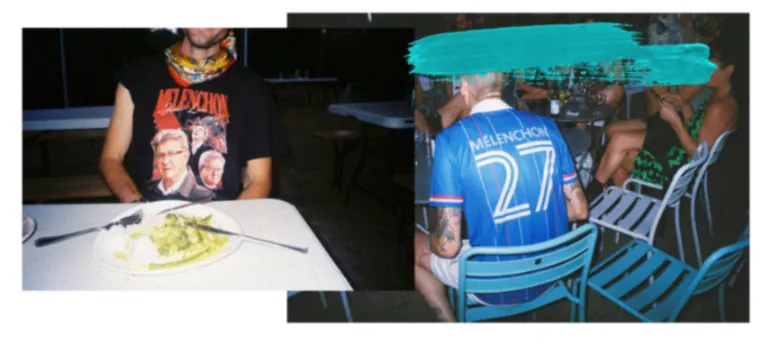
This summer, I sometimes felt like I was a character in an Ursula Le Guin novel. Each weekend, I was a character landing on a new planet with codes, rules and specific ideas of how to organise a society. From anarchist utopias to highly hierarchical gatherings, I enjoyed the variety of festivals I attended and how they broadened my understanding of how humans do or could relate to each other.
I’d initially ranked these experiences from 1 til 8 but had to admit that the main factor justifying my appreciation (or lack there of) was often my mood at the time. To avoid the brutal unfairness of my subjective recounting, here’s a list in chronological order complemented by a cheeky lil top 3.
All of the below appears behind paywall. Some of it is quite intimate and not everything needs to be shared with everyone. I’d appreciate if you keep these thoughts here :)